
Marine
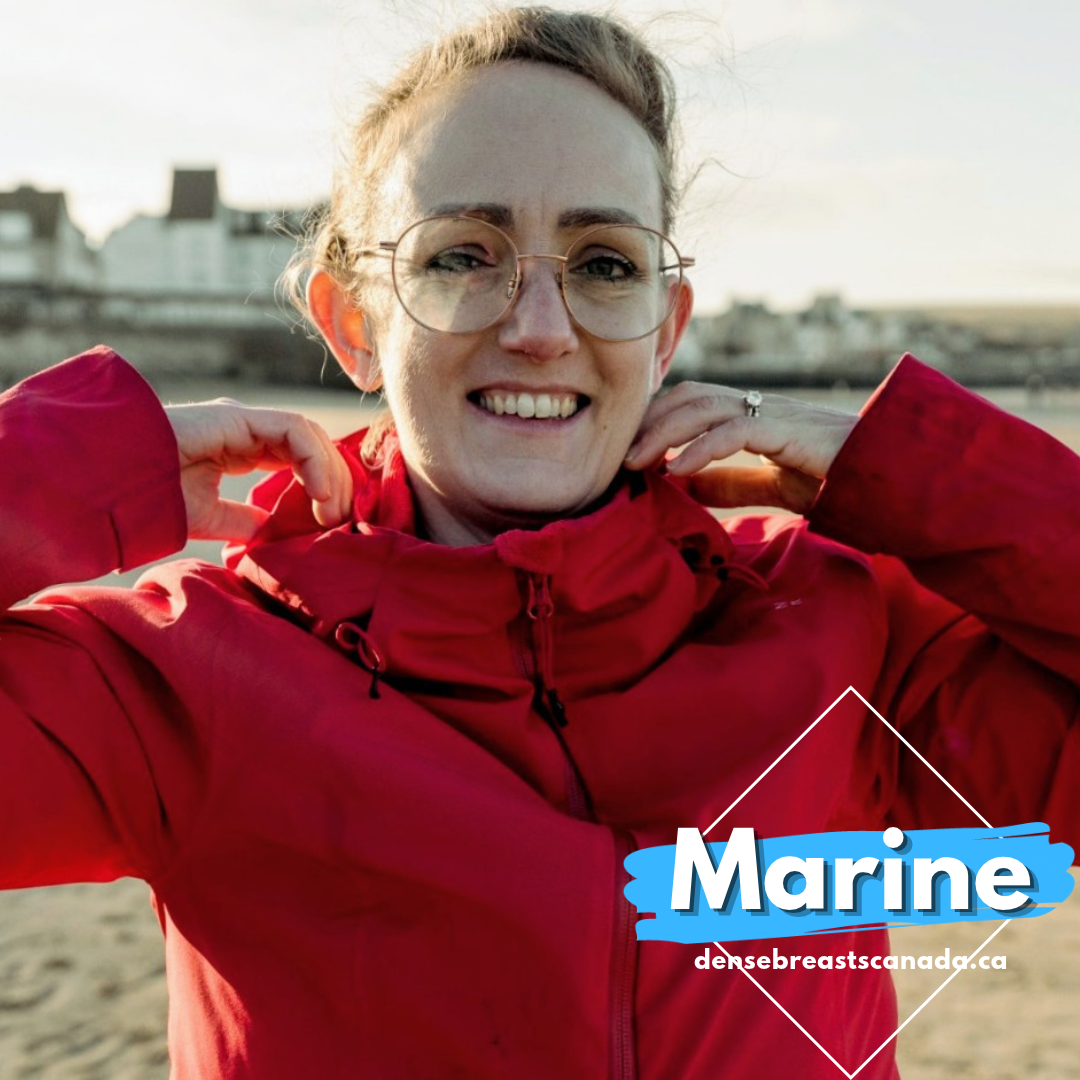
From Light to Fire: Reclaiming My Life and Rewriting the Rules of Survival
On April 9th my world flipped upside down. I got tagged with “BI-RADS 5“.
But the truth is, my journey didn’t begin that day. It began in 2020, when, at 31, I felt a cyst in my breast. I raised the alarm with my doctors immediately. I advocated for myself and underwent regular screenings for years. Despite my persistent vigilance, despite doing everything “right”, the system missed the escalating threat until it became Stage 4.
The starkest paradox of the day I received that final, devastating diagnosis? I actually ran 10 kilometers. In fact, I kept running 10-kilometer routes for another month as the reality slowly set in. I was a non-smoker, a casual social drinker, healthy, and young. My life was moving at the speed of light, I was advancing my career as a medical strategist, managing complex renovations in our home, adjusting to motherhood with my amazing daughter, Zoe, and planning my wedding to my husband, Haydn. I operated in a constant “Duracell” state of boundless energy.
Then came the diagnosis: Stage 4 Metastatic Breast Cancer.
Suddenly, my calendar wasn’t filled with project milestones; it was eclipsed by ultrasounds, mammograms, genetic testing, biopsies, blood tests, CTs, PETs, and MRIs. The Duracell in me went from careless to fiercely focused. It slowly, too slowly, became time to embrace a new routine: Letrozole, Kisqali, Zoladex, and SBRT.
With hope came acceptance, but also a fierce, rescinded grace. I’ve mourned aborted plans and stunted dreams, feeling a profound grief for the bloom of youth I had to shed. Yet, in that shedding, I found the purest forms of gratitude. I celebrated a beautiful wedding with Haydn, my hair still mine, realizing that I am deeply loved and never truly alone. To my husband, my caregiver: thank you for holding me up and loving me through every shadow.
The Fire Within: Defying the Fog
Living with metastatic breast cancer as a young woman is a relentless emotional siege. I used to call it The Lingering Light, that quiet exhaustion of maintaining a professional smile while mortality follows you like a shadow. Lately, that light has transformed. It is no longer just a flicker of fatigue; it has ignited into a boiling, vigorous fire. I fear the darkness, not just for its shadows, but because it could feed the cancer. I am afraid that the fear and anxiety might sweep me away without the chance of coming back. Yet, even in that terror, there is an intense, defiant eagerness to beat the odds. I am consumed by the hunger to fight, to remain, and to last.
This fire doesn’t just burn through my own fog; it has burned away the isolation of this path, revealing the deep love and unwavering loyalty of the people around me. Feeling so profoundly surrounded by their care has become the steady foundation beneath my spirits. It isn’t about grand gestures; it’s the beautiful simplicity of their presence. It’s bringing me sparkling water, lifting me up when pain slows me down, bringing over a comfortable sweater, or sitting with me just to do my nails. They fold me into their lives effortlessly, watching over me without treating me like I’m fragile, and quietly adjusting to whatever I can handle. They bike with me, talk with me, walk with me, and soothe me. They show up when I call, and they show up when I don’t. They remind me that I am loved, and they make me feel alive.
And to the doctors and practitioners: look at us. See the tears we blink away and feel the fear in our throats. We are more than statistics; we are lives filled with an urgent, boiling will to endure.
Fighting the Other Fight
Eighteen months in with an 80% decrease of the primary tumour site and no other active metastases. But every scan, every test feels like standing on a precipice, waiting for the ground to shift again. The fear of recurrence doesn’t just sit in the background; it shadows every breath. And so, we go all-in.
Every tactic, every surgery, oophorectomy, even mastectomy is considered, nothing is discarded if it buys more time, gives my little Zoe more years with her mother.
Surviving this is only the first front of the war. When your life depends on an antiquated system, you cannot help but view it through the lens of enterprise thinking and systemic change. What I see is a system built for a different era. Our healthcare and financial support structures were designed under the antiquated assumption that cancer is primarily a disease of the retired.
But the reality has shifted. Nearly 40% of Canadian cancer diagnoses are now hitting working-age adults, with an alarming rise among young women. We are mothers raising toddlers, professionals leading teams, and couples paying mortgages.
Sickness isn’t a right; it’s a cost we are forced to bear. We are caught in a relentless cycle where working to survive is a duty, not a choice; paying into a system that sustains others but fails to help ourselves, leaving us unable to buy even a moment of peace. It is a brutal double penalty: no insurance, no recognized right to be sick, and no mandatory compassion. We pay taxes in full while forced to grind through the pain, working merely to afford the medication that keeps us alive, or facing ruin. No one should have to trade their dignity and time for the cost of survival; access to life-saving care must be a right, not a gamble.
To support this new reality, our legislative and healthcare frameworks must catch up. We must establish universal, equitable coverage for modern life-saving medications to eliminate the benefits of the lottery. More critically, we must recognize that for those fighting life-threatening conditions, the right to rest, when and as our bodies demand it, is not a luxury, but a human necessity. This requires systemic change: legal protection for flexible, adaptable work environments and the guarantee of income security that persists through our treatment and recovery.These are not perks; they are essential protections to ensure that corporate performance goals and quarterly targets never take precedence over human survival. We must stop forcing patients to exhaust themselves working to fund their own existence, because the cruelest cost of this systemic failure is that it steals our most precious resource: time. It leaves us with less time and energy to spend with the loved ones we are fighting so hard to stay alive for.
If this year has taught me anything, it’s this: strength is not the absence of fear or exhaustion; it’s the decision to wake up anyway. True resilience isn’t corporate diplomacy, it’s learning to smile when your teeth are grinding from the pain.
Let’s fight the other fight. Let’s change tomorrow, together, so that the time we win back belongs to us, and to the people we love.