
Laura
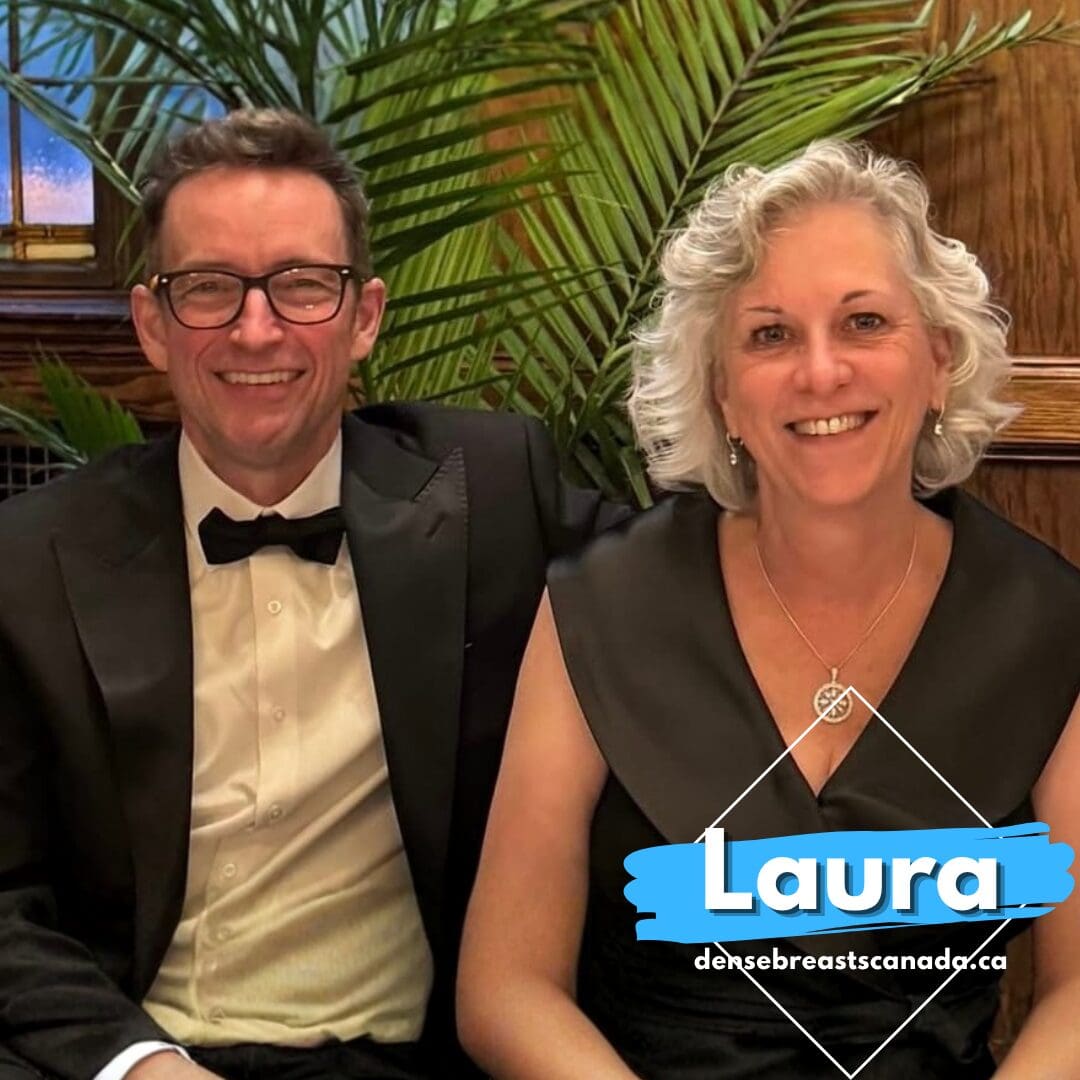
At the age of 54, after 7 normal mammograms over 14 years, I was diagnosed with Invasive Ductal Carcinoma in December of 2021. I have category C breast density and underwent a biopsy, a lumpectomy, 8 rounds of dose dense chemotherapy (AC/Paclitaxel) and then 20 rounds of targeted radiation.
My tumour was ER+ve, PR-ve, HER2-ve, Grade 3, Stage 2b (due to micro metastasis in a lymph node) and was 30mm (3 cm). I also had genetic testing which demonstrated that my tumour was not genetic, despite my biological mother having had breast cancer at the same age. I was also enrolled into a study which involved Oncotype testing. My Oncotype score was 62, which carried a 42% likelihood of recurrence without aggressive treatment.
I don’t have to tell you that this was devastating. I was a healthy, fairly active wife and a mother of 3. I rode horses, travelled, and reveled in watching my children enter adulthood. This “journey,” as we often call it, has been impossibly difficult. It has changed who I am and how I see myself, and profoundly affected how I see my future. I was fairly confident that I would reach “old age,” but now I am not so certain. A cancer diagnosis can be overwhelming, depressing and confusing all at the same time. To add insult to injury, I also fell down the stairs mid-chemo and broke my ankle, requiring orthopedic surgery, plates and screws.
The PTSD post-treatment rears its ugly head long after active treatment is completed and in many unpredictable ways. My experience post-treatment has led to feelings of strength, as well as the feeling of being thrown into the wind while I try to deal with not only the physical scars but also the psychological effects. I have found that every ache, every unexplained weakness, a new lump or swollen gland leads me back to fearing a recurrence.
Most recently, after losing my survivorship doctor to another hospital, I was sent back to my medical oncologist. She was wonderful during active treatment, but was quick to tell me that none of my requests for auxiliary screening, such as a breast ultrasound, an MRI (as I am 5 years post diagnosis at the end of this year), a 3D ultrasound at my own expense, or any other new treatments or testing had any merit and were unnecessary.
Moving forward, I am now back with my family doctor for surveillance and screening. I am feeling very “unheard” at this point and am not very optimistic moving forward. I continue to take Anastrozole and will for another 5 years. An annual mammogram, which, as we know, is simply not enough for women who have dense breasts seems inadequate to me. I will continue to advocate for myself along with sharing the latest screening research study results in the hope that I will eventually gain access to these more comprehensive screening tests.
I do feel bitter about how breast cancer has changed me and hope that one day I will be that carefree woman I was before diagnosis and treatment. Moving forward, I will continue to try to live in the present and embrace watching my children thrive.
I wish you all well and appreciate your stories and continued support. Dense Breasts Canada has provided me not only support but also relevant research, and I am eternally grateful for that.